

In an era of rapid urbanization, infrastructure development, and growing emphasis on sustainability, HDPEPipeProduction Lines have emerged as a transformative force in modern manufacturing. High-Density Polyethylene (HDPE) pipes are now the preferred choice for water supply, gas distribution, sewage systems, irrigation, mining, and industrial applications. Advanced extrusion technology enables manufacturers to produce high-quality, durable, and cost-effective pipes at unprecedented speeds and efficiency, significantly outperforming traditional materials like PVC, concrete, steel, and ductile iron.
This comprehensive guide explores how modern HDPE pipe extrusion lines are revolutionizing the plastic pipe manufacturing industry through higher productivity, superior quality, energy efficiency, and environmental benefits.
What is an HDPE Pipe Production Line?
An HDPEPipe Production Line (also known as HDPE pipe extrusion line) is a fully integrated, automated system designed to convert HDPE resin pellets into finished pipes of various diameters and wall thicknesses. The process is continuous and highly precise, allowing for large-scale production with minimal human intervention.
The complete line typically includes:
- Raw material feeding and drying system
- High-performance single-screw extruder
- Pipe extrusion die and head
- Vacuum calibration and cooling tanks
- Haul-off (pulling) unit
- Cutting unit (planetary or guillotine saw)
- Stacker or coiler for final products
- Centralized PLC control system with HMI
Modern lines often incorporate servo motors, energy-saving drives, and Industry 4.0 features for real-time monitoring and optimization.

The HDPE Pipe Extrusion Process Step by Step
The manufacturing process follows these key stages:
- Material Feeding and Plasticizing: HDPE pellets are fed into the hopper of the extruder. Inside the barrel, the rotating screw melts, mixes, and homogenizes the material under controlled temperature and pressure.
- Extrusion through Die: The molten HDPE is forced through a specially designed annular die to form a continuous pipe (parison-like tube).
- Vacuum Calibration: The hot pipe enters a vacuum calibration tank where it is shaped to exact outer diameter while being cooled to maintain dimensional accuracy.
- Cooling: Multi-stage spray or immersion cooling tanks further solidify the pipe, ensuring uniform wall thickness and preventing deformation.
- Haul-off and Traction: Caterpillar or belt-type haul-off units pull the pipe at a synchronized speed to maintain consistent production.
- Cutting and Stacking: Automatic cutters slice the pipe into standard lengths (usually 6m or 12m), followed by stacking or coiling for smaller diameters.
Advanced lines use gravimetric dosing, ultrasonic wall thickness measurement, and closed-loop control to ensure tight tolerances and minimal material waste.
Key Advantages That Drive the Revolution
HDPE Pipe Production Lines deliver multiple game-changing benefits:
- High Production Speed and Efficiency: Modern lines achieve outputs from 100 kg/h up to several hundred kg/h depending on pipe size, enabling manufacturers to meet growing global demand quickly.
- Superior Pipe Quality: Precise temperature and speed control result in consistent wall thickness, smooth surfaces, and excellent mechanical properties (high impact strength, flexibility, and crack resistance).
- Energy Efficiency: New-generation extruders with high-efficiency motors, optimized screw designs, and intelligent heating systems can reduce energy consumption significantly compared to older lines.
- Material Savings: Accurate gravimetric feeding and advanced process control minimize scrap rates, often achieving material utilization above 98%.
- Flexibility: The same line can produce pipes ranging from small diameters (16mm) for irrigation to large diameters (up to 1600mm or more) for municipal projects by changing dies and calibrators.
- Automation and Labor Reduction: One or two operators can manage an entire high-speed line, lowering labor costs and improving safety.
How HDPE Pipes Outperform Traditional Materials
HDPE pipes produced on modern extrusion lines offer clear advantages over conventional piping:
- Corrosion and Chemical Resistance: Unlike steel or concrete, HDPE does not rust or corrode, even in aggressive soils or acidic/alkaline environments.
- Flexibility and Durability: Excellent resistance to ground movement, earthquakes, and impact. Service life often exceeds 50–100 years.
- Leak-Free Joints: Heat fusion welding creates monolithic, seamless pipelines with virtually zero leakage.
- Lightweight: Easier and cheaper to transport and install, reducing overall project costs.
- Lower Carbon Footprint: Requires less energy to produce and transport, and its long lifespan reduces replacement frequency and waste.
These properties make HDPE the material of choice for sustainable infrastructure projects worldwide.
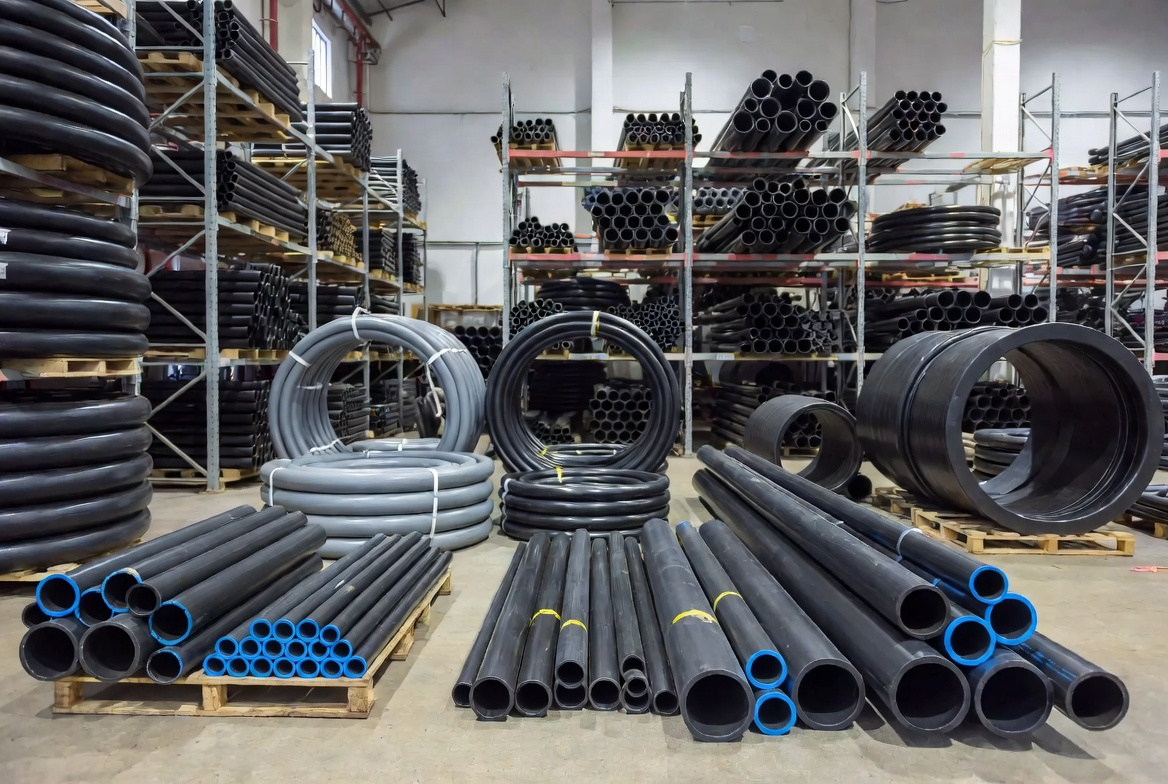
Technological Innovations Revolutionizing HDPE Pipe Manufacturing
Recent advancements include:
- Servo Motor and Variable Frequency Drives (VFD): For precise speed control and major energy savings.
- Multi-Layer Co-Extrusion: For pipes with recycled core or special barrier layers.
- Smart Control Systems: Real-time data monitoring, predictive maintenance, and remote diagnostics.
- High-Output Grooved Feed Extruders: Better processing of recycled HDPE materials.
- Advanced Cooling Technology: Faster and more uniform cooling for higher line speeds.
These innovations allow manufacturers to produce higher-quality pipes at lower operating costs while supporting circular economy goals through increased use of recycled content.
Applications Across Modern Industries
HDPE pipes manufactured on advanced production lines serve critical sectors:
- Municipal water supply and distribution
- Sewage and wastewater systems
- Natural gas and industrial fluid transport
- Agricultural irrigation and drip systems
- Mining and slurry transportation
- Cable protection conduits
- Geothermal and renewable energy projects
The ability to produce pipes in long lengths or coils further reduces installation time and joint numbers.
Choosing the Right HDPE Pipe Production Line
When investing in an HDPE pipe extrusion line, consider:
- Extruder type and screw design (single-screw high-performance models preferred)
- Output capacity matching your market demand
- Energy consumption and total cost of ownership
- Automation level and control system quality
- After-sales support and spare parts availability
- Ability to process virgin and recycled materials
Reputable manufacturers offer turnkey solutions with strong technical support to ensure smooth commissioning and long-term performance.
Conclusion
HDPEPipe Production Lines are truly revolutionizing modern manufacturing by combining high productivity, exceptional product quality, energy efficiency, and sustainability. As global infrastructure needs continue to grow, these advanced extrusion systems enable manufacturers to deliver durable, cost-effective, and environmentally responsible piping solutions that outperform traditional materials in almost every aspect.
For plastic pipe producers, water utilities, construction companies, and infrastructure developers, investing in a modern HDPE pipe extrusion line is a strategic move that ensures competitiveness, profitability, and alignment with future sustainability standards well into 2030 and beyond.
Businesses seeking reliable HDPE Pipe Production Lines, PE Pipe Extrusion Machines, or complete turnkey pipe manufacturing solutions can achieve significant operational advantages by adopting the latest extrusion technology available today.