

Buying a PVC pipe making machine goes beyond the price tag on it. Being an important part of your line of manufacture, going for the wrong machine means opening up avenues for inefficiencies, added costs, and delayed production-a decision which, unless made with due care, may fall short of your expectations, whether by a new company investing in its first machine or by a well-established company upgrading to a better model.
In this article, we take you through five essential factors that you must consider before buying any PVC pipe-making machine. Be it the performance and technical specification of the machine or its energy efficiency and after-sales support-we will cover all the key aspects that you should know to make sure you invest in the right equipment to meet your business requirements. By the end of this guide, you should be able to choose such a machine that would cut down on downtime and best return on investment.
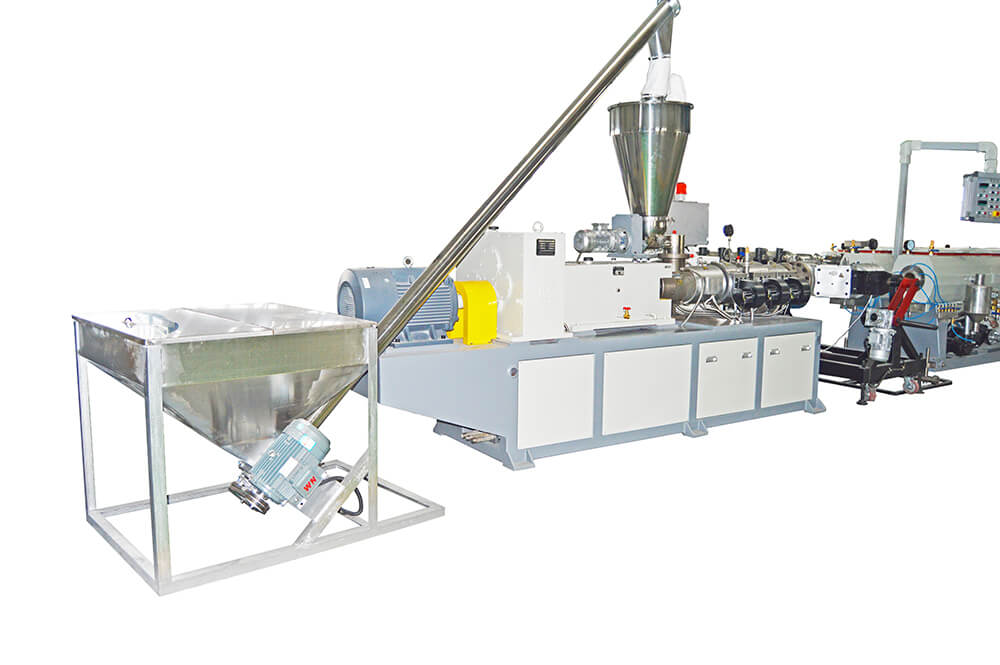
1. Equipment Performance and Technical Specifications
Before purchasing a PVC pipe-making machine, he should master its essential technical parameters, including production capability, the size range of pipes, the degree of automation, and speed of production. Equipment selection should be in line with production requirements and ensure the efficiency and stability of the quality of the products.
Key Parameters to Consider:
·Production Capacity: This means it characterizes the production capacity, the quantity of the PVC pipes the machine can make in an hour or a day. The capacities would correspond with the needs arising from the aims of production at the prevention of overinvestment or very low output.
·Pipe Size Range: There are several PVC pipe machines that can make pipes of different diameters and wall thicknesses. You shall have to decide on the size range your business shall manufacture.
·Automation Level: The more the automation in the machine, it has fewer labor costs and high consistency in production. Examples for these could include parts of automatic feeding, temperature control, and cutting.
·Production Speed: This will determine the speed at which the machine will be able to make the pipes, which is critical in meeting production deadlines and ensures maximum throughput.
Example of Key Technical Parameters:
| Parameter | Description | Recommended Range |
| Production Capacity | Output per hour or day (meters) | 1000-5000 meters/day |
| Pipe Diameter Range | Range of pipe diameters the machine can handle (mm) | 16mm – 800mm |
| Automation Level | Degree of automation (manual, semi-automatic, fully automatic) | Fully automated for high efficiency |
| Production Speed | The speed at which pipes are produced (meters per minute) | 10-50 meters/minute |
Production Efficiency
Another important factor in a PVC pipe-making machine is its efficiency in production. The higher the efficiency, the lesser the chances of experiencing any downtimes, hence reducing the cost of operation while increasing profitability.
In assessing the production efficiency, a machine’s hourly output and its capability of running continuously without frequent breakdowns have to be considered. Besides, the setup time-that is, the time it takes to change over from one size of pipe to another-of a machine should be minimal; an efficient machine should have fast changeovers and very little downtime.
Machine Durability and Quality
Among all other factors, durability is one factor that any buyer plans for when purchasing a PVC pipe-making machine. The useful life of machinery improves with good material quality, strong construction, and accurate engineering, reducing the frequency of its repair. Machines prone to breakdowns will always mean more delays to further the production process and hence an adverse impact on the overall profitability aspect.
First and foremost, it is necessary to look for those machines made from high-quality steel besides other solid materials. Make sure the equipment also has quality components, such as durable gears, motors, and temperature controllers that can bear long-term use.
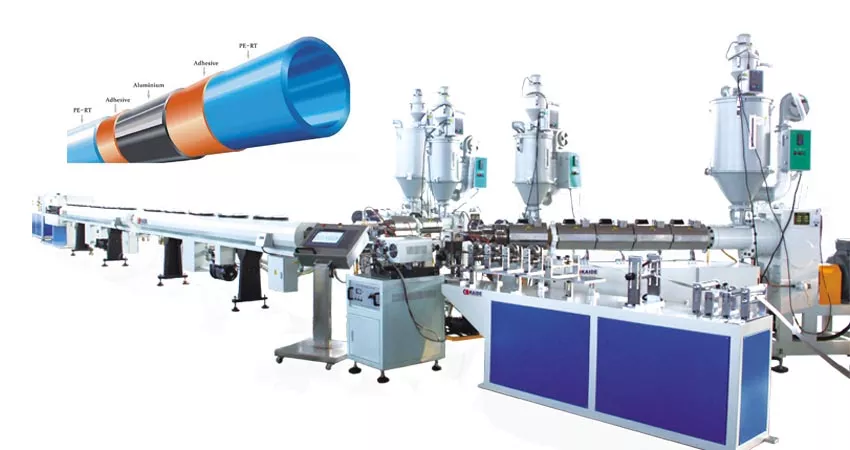
After-Sales Service and Technical Support
After-sales service and the technical support system are of prime importance while investing in a PVC pipe-making machine. You have to make sure that the supplier will be able to assist in installation, troubleshooting, and providing spare parts if needed anytime.
Good after-sales service includes:
·Installation and Training: Proper installation of the machine and training of your team for its efficient running.
·Warranty and Repairs: Knowing the terms and policies of warranty and response time to repairs.
·Ongoing Technical Support: Having the possibility to get in touch with a support team in some technical troubles or machinery optimization case.
Energy Efficiency and Environmental Impact
With the increasing cost of energy and with environmental regulations continuously tightening, either now or later, it would be important to consider the energy efficiency of the PVC pipe making machine with regard to the environment. Machines with lower consumption of energy will reduce your operating cost over time, while machines that adhere to environmental standards will help your business avoid fines and contribute towards sustainability efforts.
Ask about energy-efficient features of the machine, like variable speed drives, efficient motors, and waste minimisation systems. Some manufacturers provide certifications for their machines meeting environmental standards, such as ISO 14001 and compliance with CE standards.
Price and Return on Investment
Whereas the price of a PVC pipe-making machine is relevant in and of itself, return on investment is an even more critical element in the path to long-run success. Considering that this type of machine has a very high price, it is not just the buying price that plays a big role but also the operational costs, machine lifetime, and efficiency at production.
One may be much more expensive but with much better energy efficiency, a greater degree of automation, and durability to last long-all saving you considerably in the long run. Overall, cost comparison amongst machines and suppliers will enable you to decide accordingly.
2. Production Efficiency
Apart from these factors, production efficiency also plays an essential role in choosing the PVC pipe making machine. Its production capacity should be enquired into about the targeted demand. The other factors are hourly output, operating time of the machine, and whether it can work 24 hours without a break. These are very important determinants that give you assurance of the overall effectiveness of this machine in enabling you to meet your production targets without compromising quality or speed.
Key Considerations for Production Efficiency:
·Hourly Output: Hourly pipe output: this is the amount that the machine is capable of in fulfilling the requirement of output per hour, having in view a certain quantity to be attained at the end of the day or week.
·Continuous Operation: Whether the machine can work continuously for 24 hours without heating up and requiring much maintenance.
·Changeover Time: The time utilized in order to change production from one size pipe to another; the faster the time, the bigger the loss in overall production efficiency.
·Downtime: Frequency of machinery shutdown to attend to problems for maintenance or debugging.The lesser the shutdowns, the higher any machine’s efficiency.
Example of Key Production Efficiency Metrics:
| Parameter | Description | Recommended Range |
| Hourly Output | The number of meters of PVC pipe produced per hour | 500-3000 meters/hour |
| Continuous Operation | Ability to run 24/7 without frequent interruptions | 24-hour operation with minimal downtime |
| Changeover Time | Time taken to switch between different pipe sizes | 30-60 minutes per changeover |
| Downtime | Duration and frequency of machine downtime | Less than 5% of total operational time |
Factors Influencing Production Efficiency:
·Automation: The higher the level of automation, the more efficient production becomes, since human intervention is minimal and human error lowered.
·Machine Design and Technology:Such as variable speed drives or automated systems for temperature control and extrusion, can be applied to optimize the production process and ensure stable output quality.
·Maintenance Scheduling:Proper schedules for maintenance reduce unexpected downtimes, ensuring the machine is always in a very good working condition.
3. Machine Quality and Durability
A PVC pipe-making machine would directly influence a production line’s stability and, therefore, the stability of the final product. Quality awareness about the materials used, the adopted manufacturing process, and durability of every component would be the key for users to avoid frequent maintenance and replacement of equipment. Hence, it offers substantial long-term reduction in operational costs to ensure smoothness and interruption-free production over a period of time.
Key Factors Affecting Quality and Durability:
1. Material Selection: The quality of the material used provides durability for a long life of the machine. Steel alloys, stainless steel, and other robust materials find their common usage for making those parts which come into direct exposure to wear and heat.
2. Manufacturing Process: Improved engineering accuracy in the manufacture allows machines to possess much greater reliability. There will thus be lesser defectives coming out.
3. Component Longevity: The main integrants to be inducted would include motors, bearings, and extruders amongst others, while the control panels shall be made of rugged material to see that these are workable under immense tension and heat arising from PVC pipe production.
4. Wear Resistance: A machinery whose parts have been made to wear-resistant-say, corrosion-resistant screws or toughened extrusion dies-stands to give very consistent performances throughout its very long life.
Key Durability Indicators:
| Component | Material Type | Durability Indicators |
| Frame & Structure | High-grade steel or stainless steel | Resistance to corrosion, rust, and warping |
| Extruder | Hardened steel or chrome-plated alloys | Wear resistance, ability to handle high heat |
| Motor & Bearings | Industrial-grade motors, ceramic bearings | Long lifespan, minimal downtime, low vibration |
| Control System | Advanced PLC systems, waterproof panels | Precision control, minimal failure rates |
How Quality Affects Production Efficiency:
1. Less Downtime: High-quality machinery from high-quality materials requires less repair and maintenance; hence, they have reduced downtime during productions.
2. Stable Performance: The quality consistency of materials and components leads to more reliable performance-manufacturing uniform PVC pipes with fewer defects or variations.
3. Cost-effectiveness: Good machinery, which replaces fewer times and less frequently, is bound to be costly. Hence, the cost of operation will reduce over a long period.
Importance of Regular Maintenance:
Even the best machinery requires periodic maintenance to last long. Regular maintenance, like lubrication, cleaning, and replacement of parts, will extend the life of the machine and help avoid sudden breakdowns.
4. After-Sales Service and Technical Support
In general, a PVC pipe-making machine requires quality-assured after-sales service and technical support to work effectively. In such a situation, it will be necessary to find out what kind of after-sales service policy the supplier is willing to offer, such as installation, commissioning, operator training, and other troubleshooting services that may be involved. The supplier will guarantee timely response with professional support should anything go wrong to avoid expensive stops in the production line.
Key Aspects of After-Sales Service:
·Installation and Commissioning: Installation and commissioning are very important for the long-term performance of the machine. The after-sales service shall involve installation of the machine, checking the systems, and calibration of all parts.
·Operator Training: Training operators correctly, they are introduced to what each particular machine performs and what it takes to maintain each piece of equipment; this reduces human error by ensuring safety while operating and at full efficiency in machinery.
·Troubleshooting and Repairs: In case of problems, rapid and effective troubleshooting services help avoid lengthy periods of down time. Check to see if the supplier allows for quick response times with efficient repair services.
·Availability of Spare Parts: A good supplier would still allow access to spare parts with ease to get on location with the material as fast as possible once some form of malfunction has considered.
·Warranty and Support Coverage: what is covered, for how long, and if further support is provided or not.
After-Sales Service Features to Consider:
| Service Type | Description | Recommended Features |
| Installation & Commissioning | Setup of the machine and system checks | On-site installation with expert technicians |
| Operator Training | Educating your team on safe operation and troubleshooting | Comprehensive training sessions for all operators |
| Troubleshooting & Repairs | Resolution of operational issues and maintenance | 24/7 support with minimal response time |
| Spare Parts Availability | Access to critical parts to reduce downtime | Availability of original parts, fast delivery times |
| Warranty & Support Coverage | Protection for repairs and damages | Extended warranty period with optional support packages |
Why After-Sales Support is Crucial:
·Minimized Downtime:A good service provider sees to it that machine malfunction or breakdowns are put back into operation with minimum delay in production.
·Long-Term Support:With this, technical support from continuous technical back-up during the life of the machine will assist in surmounting every challenge as quickly as possible and raising operation efficiency by a reduction in recurrences.
·Cost Savings:In that way, effective after-sales support avoids costly repairs, prolongs the life of the machine, and keeps production running without too many hiccups.
Choosing the Right Supplier:
Furthermore, it will be of great importance when buying any PVC pipe-making machine to take into consideration the after-sales support a supplier is going to offer. Look through customers’ reviews, ask for references, and check, in fact, what a supplier promises in order to give timely professional support. What distinguishes a good from an excellent supplier can create a huge difference: keeping high production efficiency and not allowing any unplanned stops in production.
5. Energy Consumption and Environmental Performance
With the increasing stringency of environmental regulations and the continuous rise in energy prices, energy consumption and environmental performance have become critical considerations in purchasing a PVC pipe-making machine. It is only through the assessment of machine energy consumption, emission, and environmental standards that the enterprises can reduce the operational cost and meet social responsibilities.
Key Factors to Consider for Energy Efficiency and Environmental Impact:
Energy Consumption: A major long-term operating cost will be derived from the energy efficiency of the PVC pipe-making machine. Machines that have low power consumption or have been incorporated with power-saving technologies cut down on overall production costs.
Emission Control: In the process in which PVC is made, some fumes are most likely to emit, thus VOC must be the major one among the dangerous gases with which the VOC emission of machines is mainly concerned.
Compliance with Environmental Standards: Whether the machine follows international and local environmental regulations with regard to environmental management, such as ISO 14001 or a CE mark showing that the equipment meets strict environmental guidelines.
Waste Management: Production waste, such as scraps of PVC, must be disposed of with methods that reduce environmental impact to a minimum. Where possible, machinery sought should be engineered with waste-minimizing or maximum recycling attributes.
Key Energy and Environmental Performance Indicators:
| Parameter | Description | Recommended Features |
| Energy Consumption | Amount of electricity used per unit of production | Machines with energy-saving motors, variable speed drives |
| Emission Control | Control of harmful emissions during production | Compliance with emission standards, use of air filtration systems |
| Environmental Standards Compliance | Adherence to international environmental guidelines | ISO 14001, CE certification, low carbon footprint |
| Waste Management | Handling of production waste and scrap PVC | Systems that recycle or minimize scrap PVC waste, waste-to-energy options |
Why Energy Efficiency and Environmental Performance Matter:
Reduced Operational Costs: For instance, the company will pay lesser bills for electricity with energy-efficient machines and save a fortune after some time.
Meeting Regulatory Requirements: The fact that machinery is environmentally complaint saves a lot of headache in fines and penalties for companies besides earning an extra ovation for reputation as an eco-friendly business.
Corporate Social Responsibility: Opting for eco-friendly equipment means taking care of the commitment towards sustainable practices that is dear to consumers, investors, and stakeholders.
Minimized Waste: Efficient waste management also reduces environmental impacts of the production of PVC pipe, enabling cleaner production.
How to Assess Energy Efficiency and Environmental Impact:
·Energy Consumption: Look for data regarding the energy usage of the machine in kWh per unit of output for different models.
·Emissions: Ensure the machine is compliant with laid-down emission standards on gases that may be harmful and particulate materials; ask the manufacturer for certificates.
·Waste Reduction: Ask about the machine’s waste management features. For example, is it designed to recycle PVC scrap or reduce the amount of waste it produces?
The right choice of the PVC pipe making machine is quite an important decision that would affect the efficiency of production, product quality, and eventually the business outcome. Considering all the factors in this guide, including equipment performance, production efficiency, durability of the machine, after-sales support, energy consumption, and overall cost of ownership, one can make a well-informed decision that will serve their business for years to come.
Note that a good machine invests value, not just in its upfront costs but also in long-term reliability and lowering operating cost to maximize ROI. Take the time to actually identify your exact needs, consider some options, and look for machinery that’s capable of giving your required type of output within the limit of your resources.
The right PVC pipe making machine is the way to enhance your manufacturing process and increase productivity to achieve success in the competitive market. So, choose accordingly and build a solid foundation for the growth of your business from today.